Check your Updated Credit Score for FREE
Unlock your free credit
score in just a few clicks.

No impact on your score
OTP-based access in minutes
Personalized card/loan matches
Your Credit Score:
Powered By : 
Powered by :
| Privacy-first | Takes ~2
minutes
| Privacy-first | Takes ~2
minutes
Your Matched Credit Cards
Unlock your free credit
score in just a few clicks.
No impact on your score
OTP-based access in minutes
Personalized card/loan matches
How to Improve Credit Score?
Improving your credit score isn't an overnight process, but with the right habits, you can see significant progress in just a few months. Whether you're starting from scratch or recovering from a dip, these actionable steps will help you build a stronger credit profile.
- Punctual Payment History : Ensure 100% on-time payments for all loan EMIs and credit card bills to establish a consistent track record.
- Rapid Debt Clearance : Identify and settle outstanding delinquent accounts immediately; leverage debt consolidation tools to simplify high-interest repayments.
- Optimized Credit Utilization Ratio : Maintain a credit usage rate below 30% to demonstrate financial stability and avoid appearing over-leveraged.
- Credit Report Auditing : Perform regular credit report checks and initiate formal disputes to rectify inaccuracies or reporting errors with credit bureaus.
- Strategic Credit Inquiries : Minimize hard inquiries by avoiding frequent, back-to-back applications for new loans or credit cards.
- Preserve Credit Age : Maintain your oldest credit accounts to extend your average credit history length, a key factor in long-term score growth.
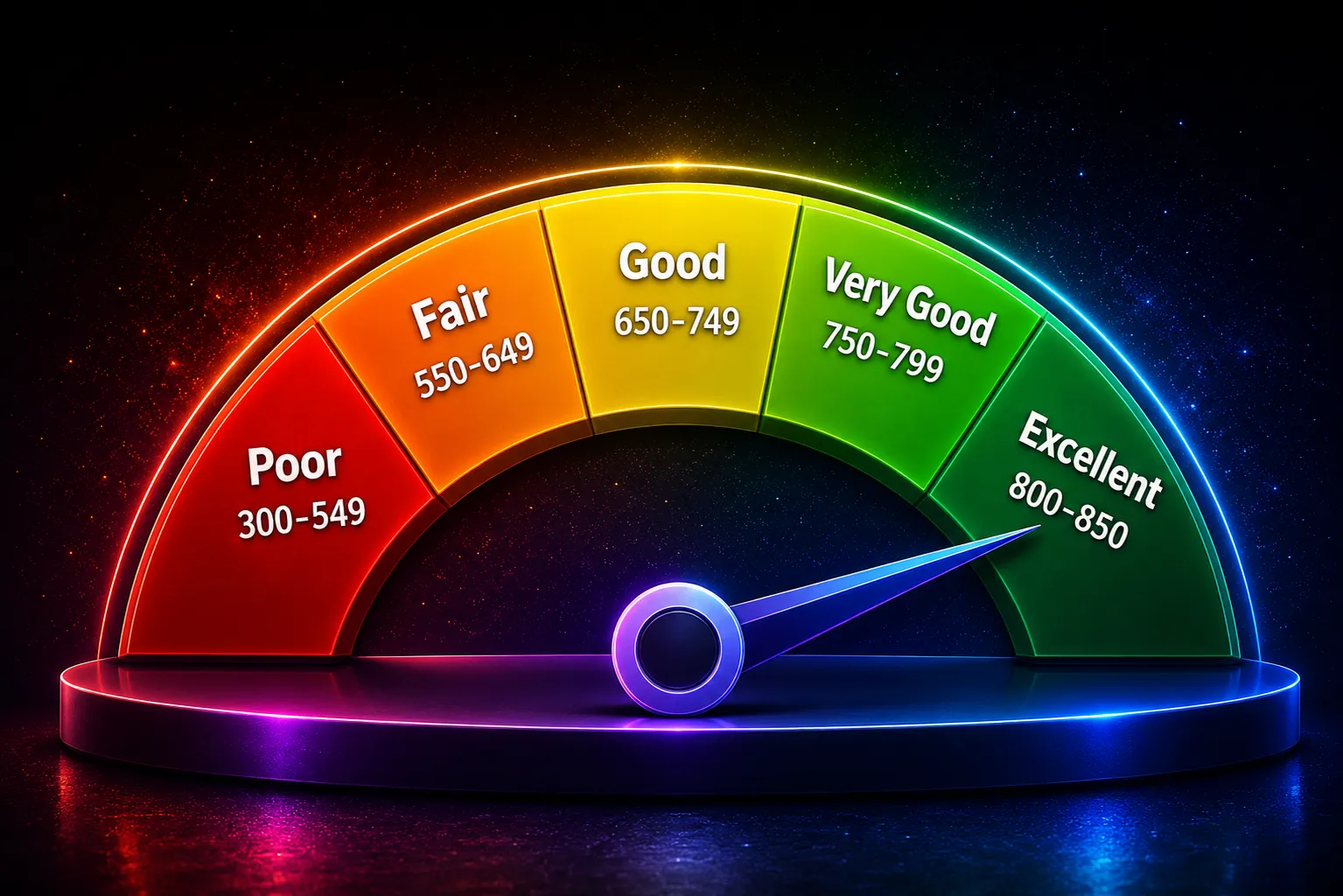
Understanding Your Credit Score: From Poor to Excellent
Your credit score is a three-digit snapshot of your financial reliability. Whether you're looking to buy a home or apply for a premium credit card, knowing where you stand on the credit score spectrum is the first step toward financial freedom.
Credit Score Range
Rating
What It Means for You
| Credit Score Range | Rating | What It Means for You |
|---|---|---|
750 - 900 |
Excellent |
You are a top-tier borrower. Expect the lowest interest rates and
|
700 - 749 |
Good |
You have a solid foundation, though you may not qualify for
"member-only" interest rates. |
650 - 699 |
Average |
You may face challenges. Lenders see some risk here, which often leads
to higher |
300 - 649 |
Poor |
Your credit health requires urgent attention. Rebuilding is possible
through consistent, |
Why Your Credit Score Matters
By moving from Average to Excellent, you unlock:

Lower Interest Rates
Drastically reduce your monthly mortgage or car payments.

Higher Credit Limits
Gain more purchasing power and financial flexibility.

Faster Approvals
Skip the manual review and get instant decisions on applications.
Key Factors That Affect Your Credit Score
Understanding what drives your credit score is the first step toward financial freedom. Whether you’re planning to buy a home or looking for a better credit card, your score acts as your financial resume.
According to Experian India , your credit score is primarily driven by your payment history, credit utilization, and credit age. Maintaining a mix of credit accounts and avoiding excessive "hard inquiries" from multiple loan applications are also critical for a healthy credit score.
The key factors that impact your Experian Score are categorized below:
1.Payment History.
- The Impact : This is the most significant factor.
- Details : Consistently paying your Credit Card bills and loan EMIs on time boosts your score. Conversely, missed, late, or delayed payments severely damage your creditworthiness.
2. Credit Utilization Ratio (Moderate Impact)
- The Impact : High impact on your overall score.
- Details : This measures the amount of revolving credit you are using compared to your total available credit limit. Experian India recommends keeping this ratio below 30%. Frequently maxing out your cards indicates credit stress and can lower your score.
3. Length of Credit History
- The Impact : Medium impact.
- Details : Lenders look for a long, stable credit record. Keeping older, well-managed accounts open helps capitalize on years of good repayment behavior.
4. Credit Mix
- The Impact : Low to medium impact.
- Details : Having a healthy balance of secured loans (e.g., home or auto loans) and unsecured credit (e.g., credit cards or personal loans) demonstrates an ability to manage various financial responsibilities efficiently.
5. Recent Credit Enquiries
- The Impact : Medium impact.
- Details : Every time you apply for a new loan or credit card, the lender performs a 'hard inquiry'. Applying for too many credit lines within a short period signals credit hunger and will negatively impact your score.
6. Credit Report Discrepancies
- The Impact : Varies.
- Details : Mistakes in your credit report (such as incorrect account statuses or personal details) can bring down your score. Experian India advises reviewing your credit report regularly to ensure factual accuracy.
What you get with NetAmbitX
Don’t just check your score. Use it.

Instant product matches (cards/loans suited to your score & need)

Eligibility-first recommendations (reduce rejections).

Simple next steps (Should be via lender journeys)
FAQ’s
A credit score is a three-digit number that reflects how reliable you are at managing and repaying credit.
A credit report is a detailed record of your credit history, including your loans, credit cards, repayment behaviour, and outstanding balances. Lenders use this report to understand how you have handled credit in the past and to evaluate your financial reliability.
Your credit score helps lenders decide whether to approve your loan or credit application and assess the risk of lending to you. A higher score improves your chances of approval and may also help you receive better loan terms or lower interest rates.
You can check your credit score on NetAmbitX by entering basic details such as your name, mobile number, and identity information, followed by OTP verification. Once your details are verified, your latest credit score and report are generated instantly.
Yes, checking your credit score on NetAmbitX is completely free and does not affect your credit score. It is considered a soft enquiry, which means you can check your score anytime without impacting your chances of getting a loan.
Credit scores typically range between 300 and 900, and each range reflects a different level of creditworthiness. Higher scores indicate stronger repayment behaviour and lower risk for lenders, while lower scores may signal higher risk or limited credit history.
A credit score of 750 or above is generally considered good by most lenders and improves your chances of loan approval. A higher score can also help you qualify for better interest rates, higher credit limits, and more favourable loan terms.
A credit score can drop due to factors such as missed or delayed loan payments, high credit card usage, or frequent loan applications within a short period. Changes in your credit behaviour are regularly reflected in your credit report, which may cause your score to fluctuate over time.
A loan rejection itself does not directly reduce your credit score. However, when lenders check your credit report during a loan application, it may create a hard enquiry, and multiple such enquiries in a short period can impact your score.
You can improve your credit score by paying loan EMIs and credit card bills on time, maintaining a low credit utilisation ratio, and avoiding multiple loan applications in a short period. Consistently responsible credit behaviour over time helps build a stronger credit profile and gradually increases your score.
If you notice incorrect information in your credit report, you can raise a dispute with the concerned credit bureau or the lender that reported the data. Once the issue is verified, the bureau updates the report accordingly, which can help ensure your credit score accurately reflects your credit history.
A credit score is a three-digit number that reflects how reliable you are at managing and repaying credit. It is calculated using information from your credit history and helps lenders quickly assess your creditworthiness when you apply for loans or credit cards.
A credit report is a detailed record of your credit history, including your loans, credit cards, repayment behaviour, and outstanding balances. Lenders use this report to understand how you have handled credit in the past and to evaluate your financial reliability.
Your credit score helps lenders decide whether to approve your loan or credit application and assess the risk of lending to you. A higher score improves your chances of approval and may also help you receive better loan terms or lower interest rates.
You can check your credit score on NetAmbitX by entering basic details such as your name, mobile number, and identity information, followed by OTP verification. Once your details are verified, your latest credit score and report are generated instantly using data from credit bureaus.
Yes, checking your credit score on NetAmbitX is completely free and does not affect your credit score. It is considered a soft enquiry, which means you can check your score anytime without impacting your chances of getting a loan.
Credit scores typically range between 300 and 900, and each range reflects a different level of creditworthiness. Higher scores indicate stronger repayment behaviour and lower risk for lenders, while lower scores may signal higher risk or limited credit history.
A credit score of 750 or above is generally considered good by most lenders and improves your chances of loan approval. A higher score can also help you qualify for better interest rates, higher credit limits, and more favourable loan terms.
A credit score can drop due to factors such as missed or delayed loan payments, high credit card usage, or frequent loan applications within a short period. Changes in your credit behaviour are regularly reflected in your credit report, which may cause your score to fluctuate over time.
A loan rejection itself does not directly reduce your credit score. However, when lenders check your credit report during a loan application, it may create a hard enquiry, and multiple such enquiries in a short period can slightly impact your score.
You can improve your credit score by paying loan EMIs and credit card bills on time, maintaining a low credit utilisation ratio, and avoiding multiple loan applications in a short period. Consistently responsible credit behaviour over time helps build a stronger credit profile and gradually increases your score.
If you notice incorrect information in your credit report, you can raise a dispute with the concerned credit bureau or the lender that reported the data. Once the issue is verified, the bureau updates the report accordingly, which can help ensure your credit score accurately reflects your credit history.